Many ways to tell a story: Tracey Emin, A Second Life at Tate Modern
Brand storytelling should embrace inspiration from other art forms, and galleries offer up an abundance of creative ideas for businesses that might feel caged within limited forms of expression.
A dark room. A big screen. Tracy Emin narrates a painful story of teenage shame over grainy Super 8mm film of retro seaside attractions. You can almost smell the candy floss, the grease, the brine.
Later, the disco music starts. “Shane, Eddie, Tony, Doug, Richard, this one’s for you,” she says sweetly, and we see her dancing to Sylvester’s 1978 anthem “(You Make Me Feel) Mighty Real”. It’s a reclamation of the female body – profoundly moving in its defiant joy.
A landmark exhibition, an iconic artist
This powerful piece, Why I Never Became a Dancer (1995), was placed at the beginning of Tracey Emin: A Second Life, a landmark exhibition spanning 40 years of the artist’s work, which ran throughout the spring and summer of 2026 at Tate Modern in London.
Dame Tracey Emin is one of the most iconic contemporary artists of her generation. She burst into the conversation about what art could be in the 1990s with her Turner Prize nominated piece, My Bed. Ever since, she’s been sharing an autobiographical story of female passion, pain, love and trauma with unflinching, brutal honesty.
“Every line I draw is a piece of my life,” she says. A Second Life traces those lines from her childhood to her recovery from cancer in middle age, and the raging tempest of womanhood in between.
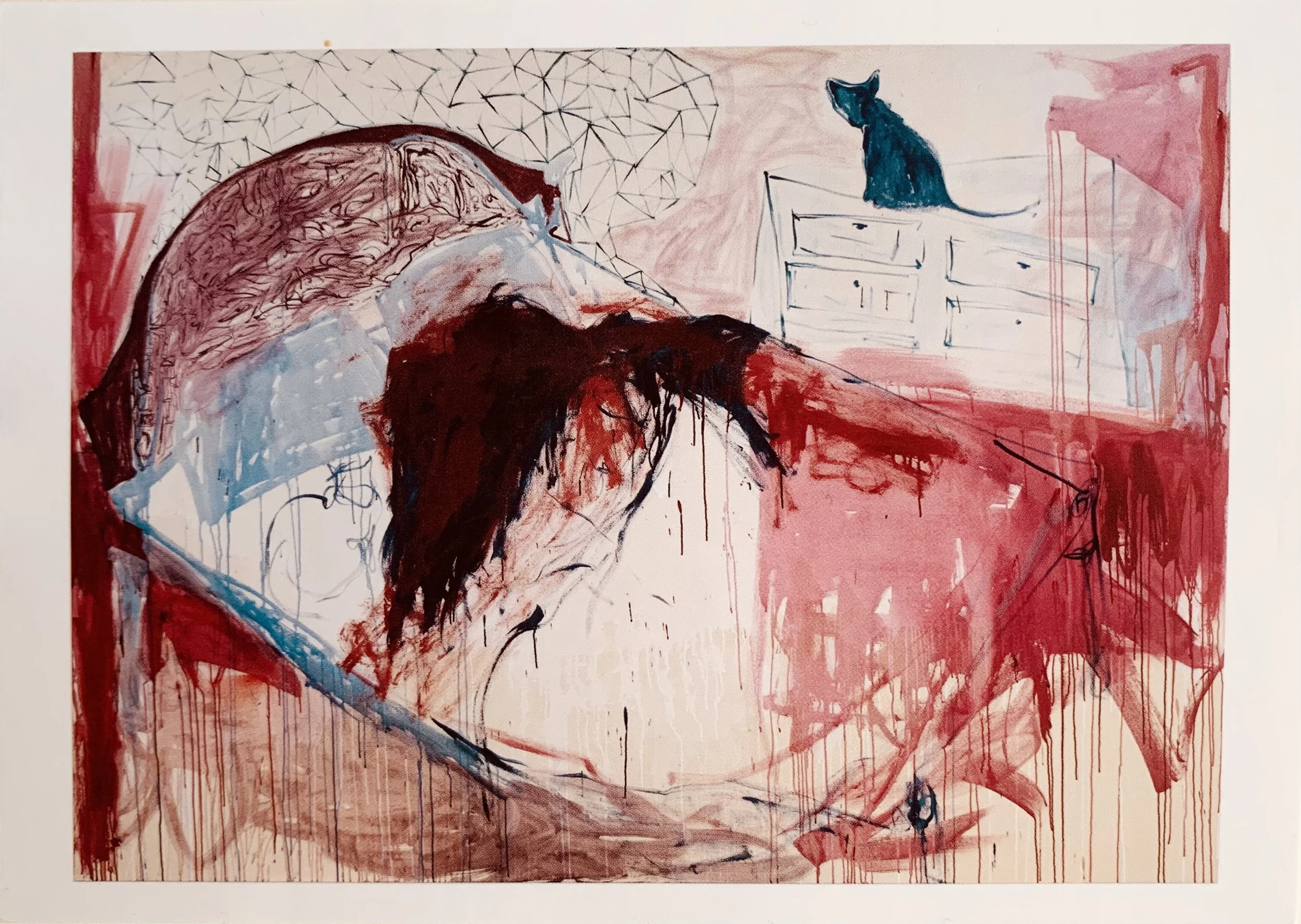
Tracey Emin, The End of Love (2024). Acrylic on canvas. Photograph by Kelly Cummins.
You make me feel
“Making a beautiful painting isn’t about making power. It’s empowering yourself to feel something, and then if you’ve done it correctly, other people look at it and feel something too.” – Tracey Emin
Make me feel, it certainly did – as all good stories must. So visceral and so intimate was this body of work, I carried the experience of seeing it out into the city evening, carefully along the riverside and onto the train home - a fragile thing, wrapped up in many layers of thought.
Not just thoughts about the themes Tracey Emin’s art explores – femininity, vulnerability, heartbreak, the body as a battleground, rage, resilience and so much more – thoughts about the myriad ways she tells those stories.
A riot of stories, told in a dark carnival of ways
Blood reds, raw pinks, bruised blues and inky blacks – bodily paintings neighbour a confessional scrawl of written works. Voluptuous bronze sculptures are illuminated by a kind of poetry in neon. “I could have loved my innocence,” one line reads. Installations made of timber, bed sheets and survival. Documentary plays within earshot of displays of iPhone portraits and polaroids, no detail left out.
An artist this bold cannot confine her expression to one medium.
Then there are the embroideries and quilts. Mad Tracey From Margate (1997) is a vital early textile work confronting local reputation, memory and trauma. You want to reach out and touch the tender stitches, but you can only stand there and take the words in – tiny, embroidered punches.
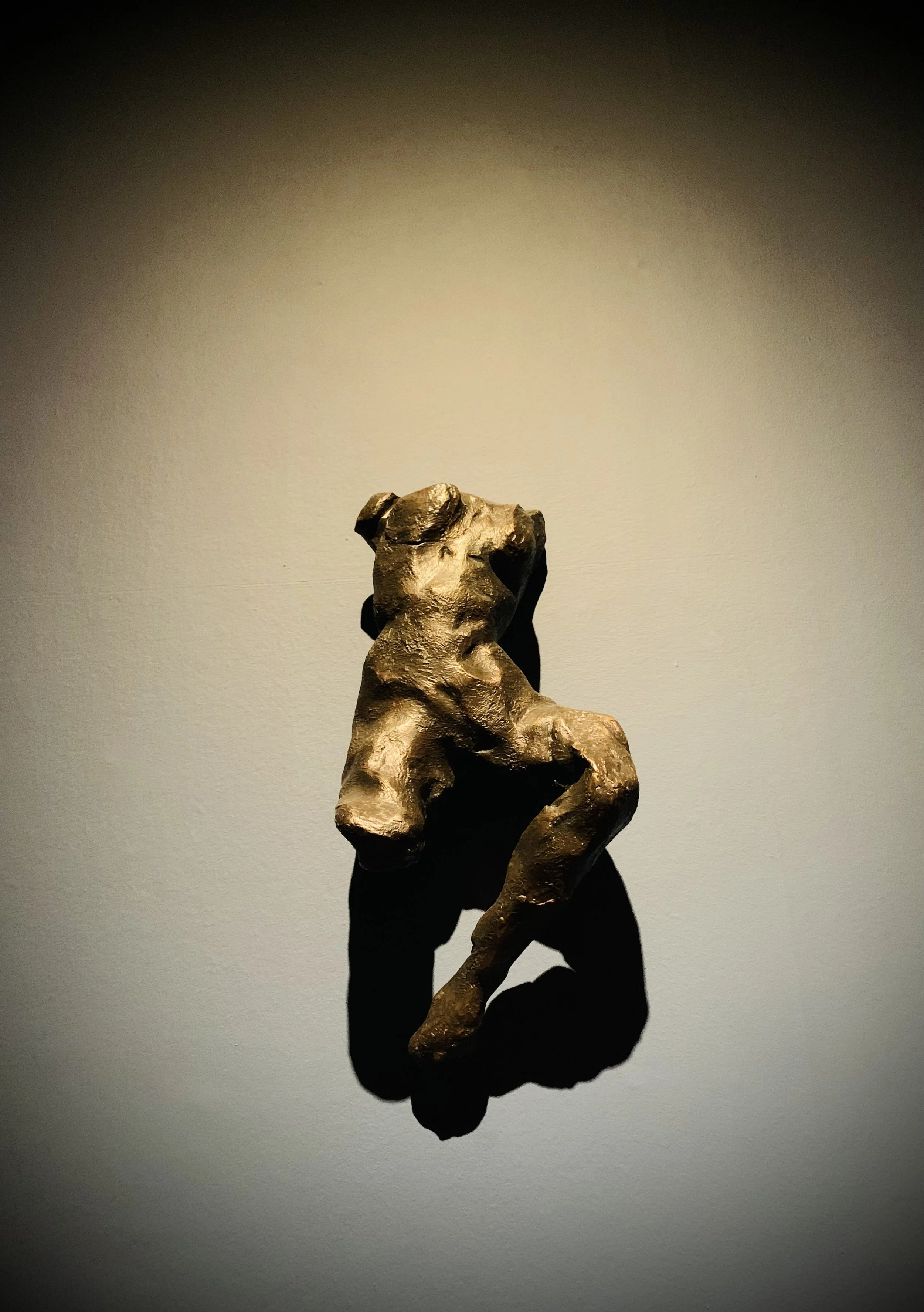
Tracey Emin, Ascension (2024). Patinated bronze. Photograph by Kelly Cummins.
Think about it differently, to tell it differently
Not to over-quote Tracey Emin (although I could), she has also said, “There should be something revelatory about art. It should be creative and open doors for new thoughts and experiences.”
What new doors could we open as copywriters and brand storytellers, I wondered on the way home? In business, what choice of media – which voices, formats and channels - could be used to tell our stories differently? Not to mention more bravely.
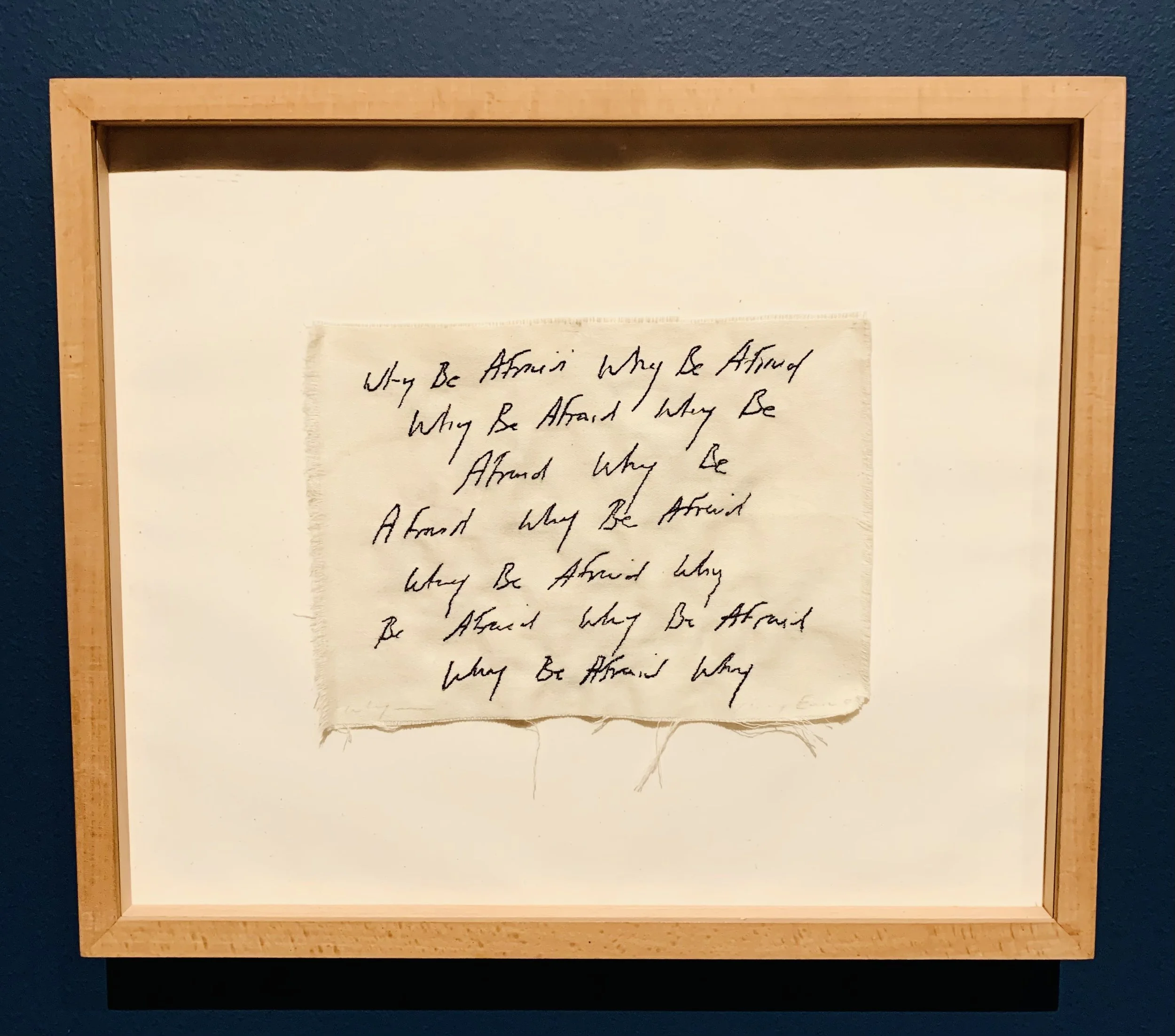
Tracey Emin, Why Be Afraid? (2009), Embroidered textile. Photograph by Kelly Cummins.
Authenticity is at the heart of brand storytelling
As a copywriter who helps businesses connect with their target audience through storytelling, my trip to see Tracey Emin’s work at Tate Modern also got me thinking about how brands could try to be more courageous about the detail in their stories.
How authentically does your business show up in the stories you tell your key audience? What parts of the draft could be left in, rather than cut, so that your audience might also roll those parts over in their minds on a train journey home - long after reading?
Make it (don’t fake it)
You don’t have to put on artist’s overalls, but perhaps musing over the multi-disciplinary work of an artist like Tracey Emin can inspire you to approach brand storytelling wearing less of a rigid suit of armor, with more of an open mind (and an open heart).
Here are a few ways you can approach brand storytelling with more authenticity, bravery and freedom of expression:
Humanise your product/service development stories and case studies with details about a mistake you made along the way, what you learnt from it and how that ‘failure’ actually facilitated a more successful end result
Don’t just share a company success story in terms of facts and figures, show how it positively impacted the daily lived experience of those involved in that journey to the summit
Tell your story using platforms that engage a variety of senses – think about sight (beautiful design, emotive words), sound (podcasts, video), touch (direct mail your target audience can hold in their hands)
Get brand storytelling inspiration from sources outside of your professional environment e.g. TV and film, books, news, gigs and galleries
Use language carefully, boldly - in new ways that spark bigger feelings in your target audience
Got stories to tell but can’t find the right words, or the time? Is your current content holding back or lacking depth? Get in touch. With my creative copywriting and brand storytelling expertise, I’ll help you discover and write stories that leave a lasting impression on your audience.